
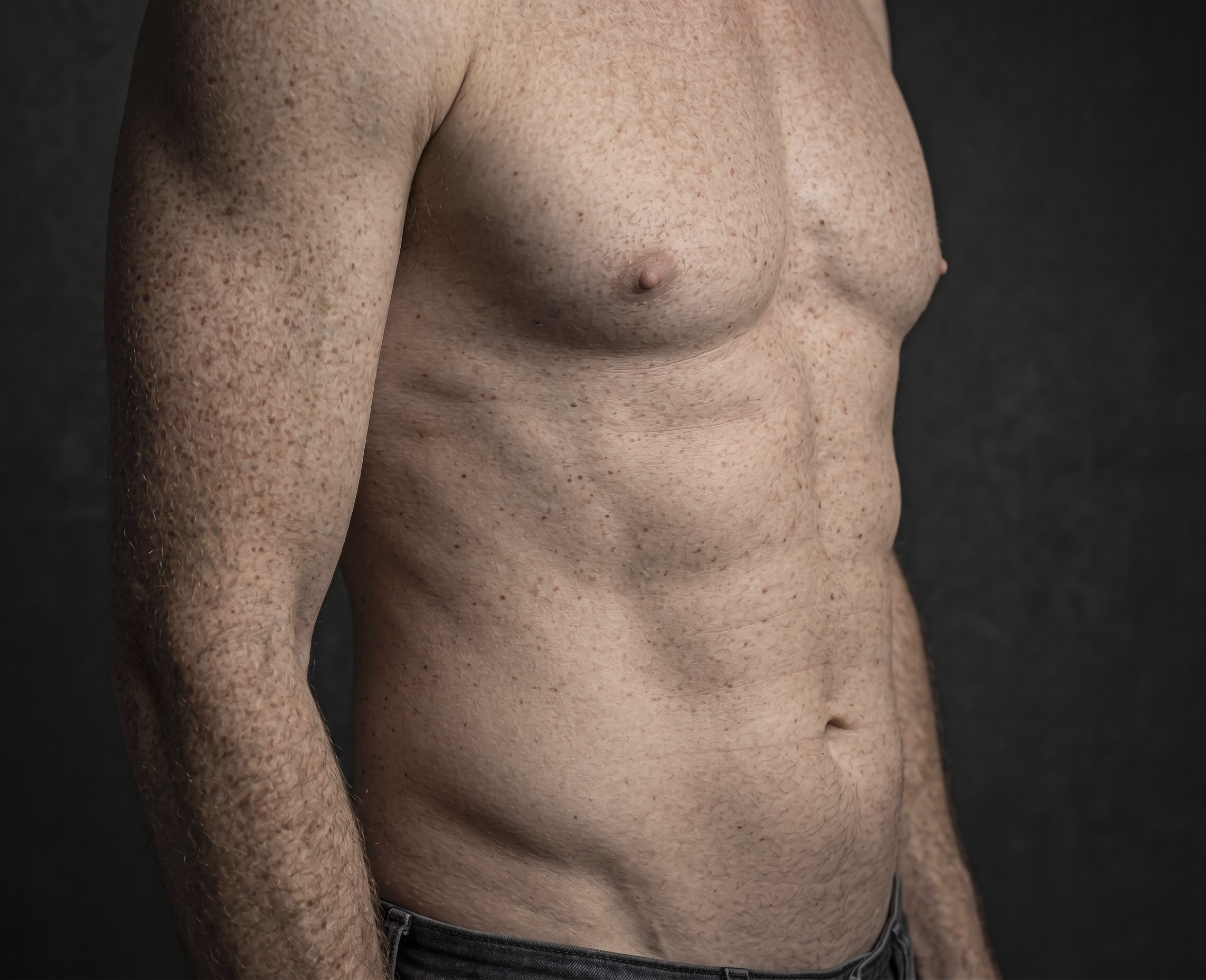
Gynecomastia (Male Breast Development)
Gynecomastia is an enlargement of the breast in men. Discover the causes, treatment, recovery, and results of a surgical correction of gynecomastia.
What is gynecomastia?
Gynecomastia is a condition in which breast tissue in men is enlarged. This can lead to a more feminine breast shape, which can be aesthetically bothersome for many men.
Although gynecomastia is a frequent and usually benign condition, it can have a significant impact on self-confidence. For example, some men avoid certain clothing or situations such as swimming, sports, or wearing tight-fitting clothes.
A surgical correction can help restore a flatter and more masculine chest contour.
INDICATIONS
When can treatment be considered?
procedure
How is a gynecomastia correction performed?
The treatment is tailored to the composition of the breast tissue. In most cases, the procedure consists of liposuction, removal of glandular tissue, or a combination of both.
Safety
When the breast enlargement is primarily caused by fatty tissue, liposuction can be applied. In this process, excess fat is removed through small incisions.
When there is pronounced glandular tissue, it can be surgically removed through a small incision at the edge of the areola.
During the consultation, it will be assessed which technique is most suitable and whether additional examination is necessary, for example, in the case of recently developed or asymmetrical breast enlargement.
Results
The goal of the procedure is a flatter and more masculine chest contour.
Many patients experience an improved body image, more self-confidence, and greater comfort with sports and clothing after the treatment.
Because excess glandular tissue is effectively removed, the result is generally permanent, as long as the underlying cause remains stable.
Aftercare
After the procedure, compression garments are usually worn for several weeks.
Swelling, sensitivity, and slight bruising may occur temporarily.
Intensive sports should be avoided temporarily. Most patients resume light activities after approximately one week.
Frequently asked questions
Your questions about gynecomastia answered
Is gynecomastia dangerous?
Gynecomastia is usually a benign condition. When the breast enlargement occurs suddenly, is clearly asymmetrical, or is accompanied by pain, nipple discharge, or a palpable lump, additional examination may be indicated to rule out other causes.
What is the difference between gynecomastia and fat storage?
In true gynecomastia, there is an increase in glandular tissue, whether or not combined with fatty tissue. In pseudogynecomastia, the breast enlargement consists primarily of fat storage, often in the context of weight gain.
This distinction is important because pseudogynecomastia can sometimes be treated primarily with liposuction, while true gynecomastia often also requires the removal of glandular tissue.
Can gynecomastia disappear on its own?
In adolescents, gynecomastia can sometimes disappear spontaneously. In adults, the breast enlargement usually persists when glandular tissue is present.
Can exercise correct gynecomastia?
Exercise can reduce fat and strengthen the pectoral muscle, but glandular tissue usually does not disappear through training alone. When true gynecomastia is present, surgical correction is often the only way to make the chest completely flatter.
What is the recovery like after a gynecomastia correction?
After the procedure, compression garments are usually worn for several weeks. Swelling, sensitivity, and slight bruising may occur temporarily.
Most patients resume light activities after approximately one week. Sports activities are usually resumed gradually after three to four weeks, depending on the recovery.
Will there be visible scars?
The incisions are placed so that they are as inconspicuous as possible. They are usually located at the edge of the areola or in small incisions for liposuction.
Over time, these scars usually fade and become barely noticeable.
Do I need to wear a compression garment after the procedure?
Yes. In most cases, compression garments are worn for several weeks after the procedure to allow the skin to adhere properly and to limit swelling.
Is the result permanent?
Because excess glandular tissue is effectively removed, the result is generally permanent, as long as the underlying cause remains stable.
Can gynecomastia return?
When the underlying cause remains stable, the chance of recurrence is generally small. However, with persistent hormonal influences, weight gain, or the resumed use of anabolic steroids, gynecomastia can develop again.
Is the procedure painful?
The procedure is generally well-tolerated. After the procedure, the chest area is usually tight or sensitive, but this is typically well-managed with standard pain relief.

Schedule your personal consultation
Discover how we can enhance your well-being and self-confidence with our specialized care.