

Facelift
A facelift corrects sagging of the cheeks, jawline, and neck. Modern techniques such as the mini facelift, MACS facelift, and deep plane facelift restore facial contours while maintaining a natural appearance.

What is a facelift?
A facelift is a surgical procedure in which the sagging structures of the face and neck are repositioned to restore the natural contours of the face.
With aging, the skin and underlying tissues gradually lose their elasticity. This can lead to various signs of facial aging, such as jowls, a less defined jawline, deep folds between the nose and mouth, marionette lines around the mouth, and excess skin in the neck area.
A modern facelift does not focus solely on tightening the skin. The procedure primarily corrects the underlying support structures of the face. By returning these structures to their original position, the face can be rejuvenated in a natural way without altering facial expressions.
The goal of a facelift is a fresher and more rested appearance while maintaining a natural result.
INDICATIONS
When is a facelift considered?
AGING
What happens during facial aging?
Facial aging is a complex process in which various structures change.
Key factors include:
- skin laxity
- sagging of the deeper tissues of the face
- volume loss in fat compartments
- changes to the jawline and neck
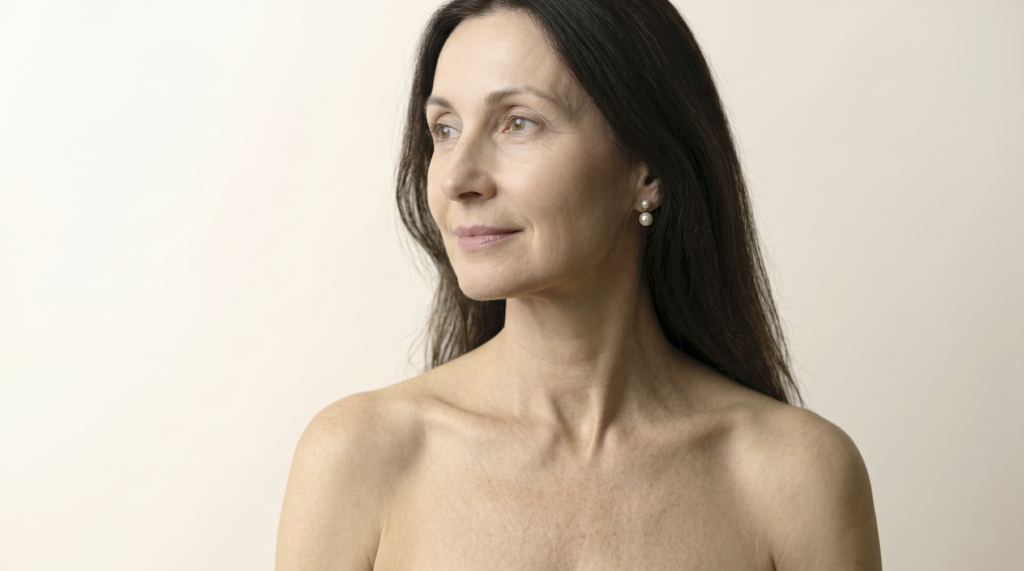
These changes can lead to the formation of jowls and a less defined jawline. The transition between the face and neck also becomes less distinct, which can make the face appear heavier or more tired.
A facelift corrects these sagging structures by returning them to their original position.
TECHNIQUES
Which facelift is right for me?
Not every form of facial aging requires the same treatment. The choice of the appropriate facelift technique depends on the anatomy of the face, the quality of the skin, and the degree of tissue laxity.
During a consultation, it will be carefully assessed which technique best suits your situation.
- for early signs of aging, a mini facelift may be suitable
- for moderate sagging of the cheeks and jawline, a MACS facelift may be considered
- for pronounced aging of the midface, a deep plane facelift may be more appropriate
- when the neck also shows signs of aging, a facelift is often combined with a neck lift
procedure
How is a facelift performed?
During a facelift, the underlying structures of the face are gently released and repositioned into a more youthful state. The procedure focuses primarily on the SMAS system, an important supporting layer of the face that plays a central role in facial aging.
Safety
A facelift is usually performed under general anesthesia. During the procedure, incisions are made around the ear and potentially in the hairline, depending on the chosen technique.
Through these access points, the underlying tissues of the face are carefully released. The deeper structures, including the SMAS, are lifted and fixed in a more youthful position. Excess skin is removed, and the skin is redraped smoothly without excessive tension.
Results
A facelift can significantly improve the contours of the face. The procedure provides a tighter jawline, correction of sagging cheeks, and a better transition between the face and neck.
By repositioning the underlying structures instead of merely tightening the skin, a natural and lasting result is achieved while preserving facial expressions.
Aftercare
After the procedure, the treated area will be temporarily swollen and bruising may occur. In the first few days, a bandage is often applied, and sometimes a support band is used to support the tissues.
Sutures are typically removed after approximately 8 to 10 days. During the first few weeks, it is recommended to avoid physical exertion, bending over, and pressure on the face.
Most patients gradually resume their daily activities after about two weeks. The final result continues to develop in the months following the procedure.
EXPERIENCE
Your questions about a facelift answered
What is the recovery process like after a facelift?
After a facelift, swelling, bruising, a feeling of tightness, and temporary sensitivity or numbness of the skin are normal. A bandage is usually removed after a few days. Sutures are typically removed after 8 to 10 days. Most patients feel presentable in social contexts again after about two weeks.
Where are the scars located in a facelift?
Incisions are usually placed discreetly around the ear and often partially in the hairline. The exact location depends on the chosen technique. Over time, the scars gradually fade; full scar maturation usually takes about one year.
Is the result of a facelift permanent?
A facelift corrects existing signs of aging, but the natural aging process continues. The result usually remains visible for many years.
At what age is a facelift usually performed?
This depends less on age and more on the degree of tissue laxity. Many patients consider a facelift between the ages of 45 and 70.
What is the difference between a mini facelift, MACS facelift, and deep plane facelift?
A mini facelift is primarily suitable for early sagging. A MACS facelift may be indicated for moderate sagging of the cheeks and jawline. A deep plane facelift is more often considered for more pronounced aging of the midface and deeper structures.
What is the difference between a facelift and fillers?
Fillers can temporarily correct volume loss and soften certain folds. In cases of significant sagging, fillers do not address the cause and can sometimes make the face look heavier. A facelift reposition the sagging tissues and thus restores contours without adding extra volume.
Can a facelift be combined with other treatments?
Yes. A facelift is sometimes combined with a neck lift, eyelid surgery, facial lipofilling, or skin improvement treatments.
Does a facelift always look unnatural?
No. Modern facelift techniques focus on restoring the underlying support structures, not on pulling the skin tight. The goal is a natural result while preserving facial expressions.
Related procedures
More information about related facial treatments:

Schedule your personal consultation
Discover how we can enhance your well-being and self-confidence with our specialized care.